


Brow Lift
Serving Cincinnati, Ohio & the Tri-State Region- The lateral temporal brow lift is the brow lift procedure Dr. Harmon performs most frequently
- The lateral temporal brow lift involves two small incisions in the hair to help address the most common age-related changes in the region of the eyebrow
- The lateral temporal brow lift incisions are often covered by long hair while they are healing
- Bruising and swelling usually resolve quickly after a lateral temporal brow lift
- Can be performed with an upper blepharoplasty and facial fat grafting of the temples to address signs of facial aging in the region more comprehensively
Contact Us

What is a Brow Lift?
A brow lift is a surgical procedure performed for the purpose of lifting the eyebrows, which can droop and hang over the lateral portion of the upper eyelids with age. One or multiple incisions are made in and around the hair-bearing scalp. The number of incisions and the location(s) of the incision(s) is/are dependent on the direction and severity of eyebrow drooping as well as secondary goals including, but not limited to, raising or lowering the patient's hairline. The fibrous attachments of the eyebrows to the bony rim of the eyes are released with every approach. The eyebrows are lifted and secured in one or multiple directions using sutures and/or other materials. The most common brow lift procedure Dr. Harmon performs is the lateral temporal brow lift, which involves two small incisions placed within the hair to access and lift the eyebrows and the temples. The lateral temporal brow lift is among the least invasive approaches to a brow lift. It helps address the most commonly experienced features of age-related changes to the eyebrows (1, 2).
What Conditions Does the Procedure Address?
The eyebrow is composed of hair, skin, a fat pad, and fibrous attachments to the bone above the eye. The fibrous attachments of the eyebrow to the bone can weaken with age. As a result, the eyebrow falls over the bony rim of the eye and the eyelid. The lateral portion of the eyebrow tends to fall more frequently and dramatically than the medial eyebrow. A brow lift helps address age related changes to the eyebrows. The conditions a brow lift helps address include:
Lateral eyebrow drooping over the eye, also known as hooding, which can obscure a portion of the upper eyelid and transform the eyebrow from being straighter and oriented superiorly and laterally to being more arched and oriented more inferiorly and medially
Medial eyebrow drooping near the nose, though medial eyebrow drooping tends to happen less frequently and be less severe than lateral eyebrow drooping
Significantly asymmetrical eyebrows, though perfect symmetry is not possible with any surgical or non-surgical procedure


Before & After
Explore our galleries to see the stunning, natural results delivered by one of the best brow lift surgeons in Cincinnati, Dr. Harmon.


Why Choose Dr. Harmon
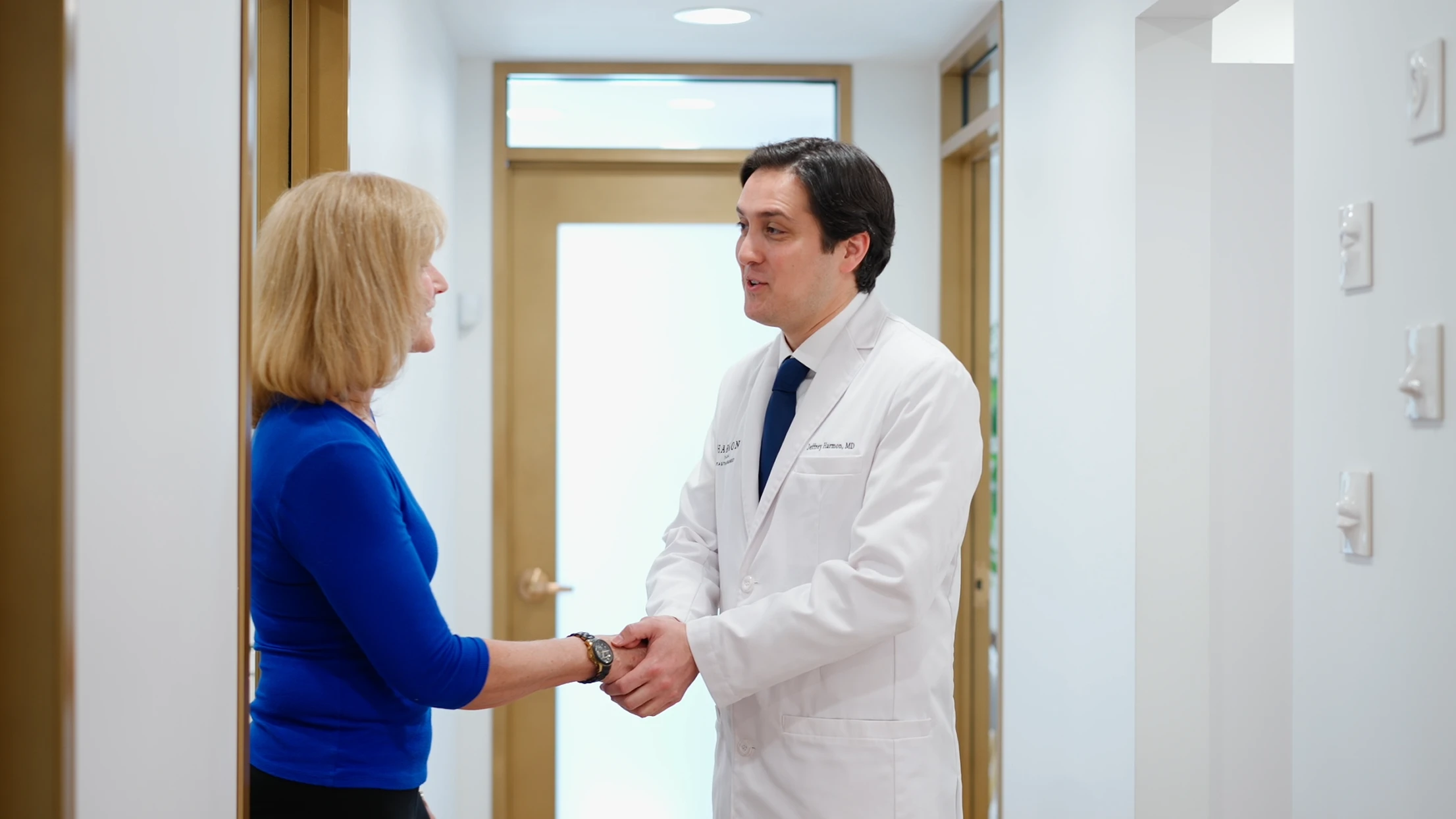
The desire for youthfulness is understandable. There is no area more important than the face. After all, the face cannot be hidden. It is how we present ourselves to the world. Dr. Harmon works with a refined eye and trained hands to develop a personalized treatment plan with you, utilizing advanced techniques in surgical and non-surgical care of the face, nose, eyes, neck and hair.
Fellowship trained facial plastic surgeons have a unique specialized skill set in performing surgical and non-surgical procedures on the face, nose, eyes, neck and hair. The pathway to becoming a facial plastic surgeon begins with five years of rigorous training in head and neck surgery. This training is focused on all aspects of surgery for the head and neck, in addition to aesthetic and reconstructive procedures.
A small pool of top performing graduates from head and neck surgery programs are then selected to complete sub-specialty training as a fellow in facial plastic and reconstructive surgery through the American Academy of Facial Plastic and Reconstructive Surgery (AAFPRS).
Dr. Harmon completed his fellowship in facial plastic surgery through the AAFPRS with the world-renowned facial plastic surgeon Dr. Andrew Jacono on Park Avenue in New York City. Dr. Jacono is world renowned for developing the extended deep plane facelift technique. Dr. Harmon is one of the few surgeons in the world, and the only surgeon in the Cincinnati area, fellowship trained in this technique by Dr. Jacono.
Quad A Accredited Surgery Suite
Harmon Facial Plastic Surgery is proud to have a Quad A accredited operating room and facility in our office. Our single-physician, single-specialty facility meets or exceeds the strict guidelines and high standards set forth by Quad A, demonstrating our strong commitment to patient safety and excellence in surgical care. We utilize the services of board-certified anesthesiology physicians only as well as our own personal clinical support staff to ensure the most comfortable, safest experience for our clients.
Out-of-Town Patients
This level of care draws patients from across the Tri-State region, including Cincinnati, Ohio, Northern Kentucky, Indiana, and surrounding communities. Our team coordinates every consultation, procedure, and follow-up appointment for those traveling from outside the local area, so the distance is the only hard part.

Types of Brow Lift Procedures
The types of brow lift procedures are distinguished by the number and location of the incisions. The most appropriate surgical approach depends on the patient's aesthetic concerns as well as whether there are secondary treatment goals of surgery other than lifting drooping eyebrows.
Lateral Temporal Brow Lift
The most common brow lift procedure performed by Dr. Harmon, a lateral temporal brow lift helps address the most commonly experienced features of aging in the eyebrows. Two small incisions are made in the hair-bearing temples. The fibrous attachments across the entirety of the eyebrows are released. The lateral eyebrow and temple skin is then lifted superiorly and laterally with dissolvable sutures. This can also lift the medial eyebrow near the nose. The intended effect is to make the eyes appear generally more open.
Endoscopic Brow Lift
An endoscopic brow lift involves placing approximately four (4) or five (5) small incisions across the hair-bearing scalp, including incisions similar to those of the lateral temporal brow lift. The purpose of these incisions it to allow additional instruments to be placed in the surgical field to assist with the lift. These instruments include a video telescope to assist with visualization. They also include graspers and electrocautery for the purposes of cutting the muscles that pull the medial eyebrows down.
Coronal Brow Lift
A coronal brow lift involves making a single long incision behind the hairline and extending from temple to temple. Unlike an endoscopic brow lift, a coronal brow lift is then performed under direct visualization. Some of the hair-bearing scalp is removed with this procedure. As a result, a coronal brow lift may be appropriate for patients who have a low hairline and seek to raise it, though this is uncommon.
Hairline Brow Lift
An incision of similar length to a coronal brow lift can be placed at or near the hairline. This is called a pretrichial or hairline brow lift. It is a similar procedure to a coronal brow lift. However, the hairline brow lift can lower the hairline rather than raise it.
Direct Brow Lift
A direct brow lift involves placing an incision at the superior border of the eyebrow. This approach is often used in patients who have experienced paralysis of the face secondary to surgery, trauma, or infection. A paralyzed eyebrow can result in more significant asymmetry than what age-related changes cause.
Overview of the Procedure
The team at Harmon Facial Plastic Surgery works tirelessly to prepare patients well for surgery. The time spent with patients and resources provided facilitates a smooth transition from surgery through recovery. The following overview is a broad summary of the information provided to patients:
Procedure Consultation
Expect a detailed, informative discussion with Dr. Harmon about your concerns and aesthetic goals. He will develop a personalized treatment plan to address these concerns and goals.
Pre-Treatment Preparation
Patients receive a packet with detailed pre-operative instructions prior to surgery. This packet includes information on what supplements and medications to hold prior to surgery, activity restrictions, and what supplies are necessary for post-operative recovery. Prescriptions are sent prior to surgery with instructions on their use. Finally, if medical clearance is required, a form detailing the necessary clearance and testing is provided to present to their primary care provider.
Day of Treatment
Patients are instructed to arrive at the office in comfortable clothes. The surgical plan is discussed with the patient in detail. Paperwork is completed. Photos are usually taken pre-operatively. Finally, the patient meets the surgical team, which may include nurses, anesthesiologists, and/or scrub technologists, depending on the procedure(s) and type of anesthesia used.
Follow-Up Appointment
The sutures for a brow lift are removed at approximately seven (7) and ten (10) days after surgery. Subsequent follow up depends on how healing progresses.
Social Readiness
Bruising tends to be minimal after surgery. Bruising usually resolves approximately seven (7) to ten (10) days after surgery. Swelling usually resolves five (5) to seven (7) days after surgery. The incisions are small (approximately 1.5 cm) and hidden in the hair of the temples. The incisions are also often covered by long hair. As a result, most patient feel ready to socialize by approximately seven (7) to ten (10) days after surgery.
Ideal Candidates for Brow Lift
Ideal candidates for brow lift include those patients who demonstrate:
- Drooping of the lateral eyebrows over the eyes, which can make the eyes appear less open and patients appear tired
- Drooping of the medial eyebrows near the nose
Most candidates for a brow lift range in age from thirties (30s) to seventies (70s). A consultation is essential to determine candidacy for the procedure, because there may be factors that preclude this procedure for certain individuals.
Dr. Harmon has met very few patients who are not potentially good candidates for lateral temporal brow lift surgery. He believes this is because the vector the lateral brow is lifted minimizes the chances of distorting the anatomy surrounding the eyebrow. However, there are three (3) cases where a patient may not be a good candidate for a lateral temporal brow lift surgery despite having hooded eyes from a drooping lateral eyebrow.
The first example is a patient with such severe thinning and recession of their hair that the relatively small incisions would be potentially too visible for a specific patient’s comfort. It is important to note that the incisions for a lateral temporal brow lift are more limited than with an endoscopic brow lift, coronal brow lift, pretrichial brow lift, and other approaches. Furthermore, no skin needs to be excised at the incision sites, which eliminates tension that could otherwise affect healing. The incisions may, however, remain too visible for comfort with severe hair loss. This is entirely dependent on patient preference.
The second example of a patient who may not be a good candidate for lateral brow lift surgery is someone who underwent an upper eyelid (blepharoplasty) surgery elsewhere that was aggressive, resulting in an inability to close the eyes when the planned brow lift is measured and simulated. This condition is called lagophthalmos.
The third example of a patient who may not be a good candidate for lateral temporal brow lift surgery is someone whose eyebrows already sit much higher than average such that lifting them could impart a too extreme, “fox-eyed” look. This feature is, from Dr. Harmon’s experience, extremely rare.
Dr. Harmon is known for doing a thorough evaluation of patients in consultation to determine whether an incision may be too visible, whether lagophthalmos is a significant risk with surgery, and/or whether lifting the eyebrows may look too extreme or distorted.
A consultation will help establish reasonable expectations about what a brow lift can and cannot accomplish as well as any anatomic and/or physiological factors that may influence results. As with all facial plastic surgery procedures, results can vary.
Lateral Temporal Brow Lift Post-Operative Instructions
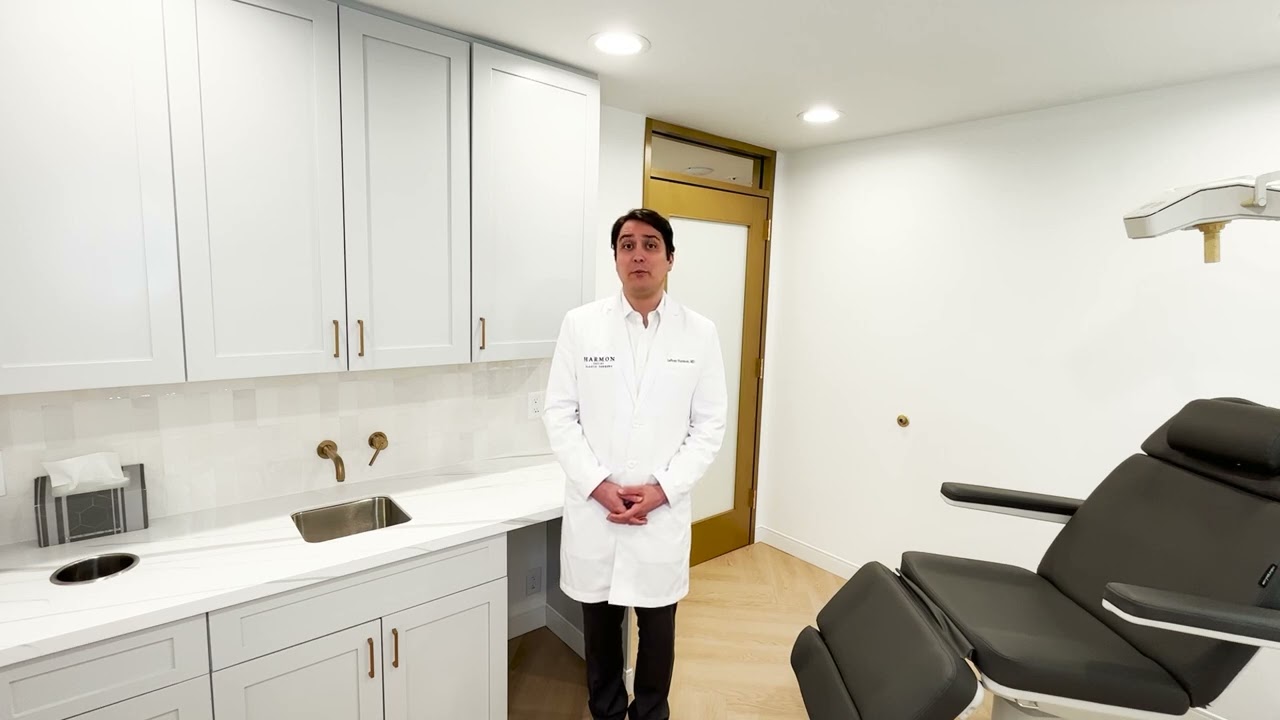
*Disclaimer: The recovery and post-operative information in this video is intended for Dr. Harmon’s patients only. Dr. Harmon may give instructions that differ from those in this video if he determines it is appropriate for a specific patient. Patients should always follow the instructions provided to them by Dr. Harmon and his team.
What to Expect from Recovery
Recovery from a brow lift is specific to the individual. The duration of recovery will vary from person to person.
Initial recovery time from a brow lift procedure is approximately seven (7) to ten (10) days for most individuals.
Sutures are removed in a staged fashion at approximately seven (7) and ten (10) days after surgery. The healing process does not end after ten (10) days, however. For example, the incisions continue to heal for months after surgery.
Some swelling and bruising are expected after a brow lift. Post-operative swelling and bruising generally improve significantly by seven (7) to ten (10) days after surgery. Swelling and bruising around the incisions are expected to continue to improve and resolve in the ensuing days and weeks.
Sutures are removed in a staged fashion
Swelling and bruising are improved
Initial recovery
Benefits of Brow Lift
The potential benefits of a brow lift are multi-factorial and include, depending on the specific type of brow lift procedure performed:
- A more open appearance to the eyes
- A relief of hooding of the eyebrow over the lateral eyelid
- A straighter eyebrow angled in a more youthful direction
- Lowering of the hairline
- Raising of the hairline
There are tradeoffs with the lateral temporal brow lift when comparing it with other brow lift procedures. There are also tradeoffs tradeoffs when Dr. Harmon decides on the specific details regarding the approach to the lateral temporal brow lift with each patient. As stated previously, the lateral temporal brow lift requires fewer, shorter incisions than other approaches. These incisions focus the lift on the lateral brow and temple, though one study does suggest the medial brow may be lifted by a very small amount (3). Other approaches are more likely to involve a more aggressive dissection and release of the medial eyebrows and the space between them. In some cases, the muscles that pull the medial eyebrows down (procerus muscle, corrugator supercilia muscles) are cut or cauterized. This can result in a much more significant lift of the medial eyebrows than with the lateral temporal lift, which requires finesse in balancing the release and lifting of the hooded lateral eyebrow with a release medially. Some may prefer a more aggressive lift medially. Dr. Harmon is concerned that such a lift may look more unnatural and could impart a “surprised” look. Also, Dr. Harmon has observed in some patients who underwent such brow lifts many years ago that the lateral brow will fall again, but the medial brow will remain elevated, which he feels looks unnatural.
Dr. Harmon considers the approaches that utilize a long incision across the forehead between the temples when the goal is to raise or lower the hairline, which these procedures can be useful for.
The thickness and extent of the temporal hairline influences the incision placement to a certain extent. The closer an incision is to the lateral brow and a slightly more vertical vector to the lift can improve the effectiveness of the procedure. Dr. Harmon adjusts to balance the effectiveness of the procedure and to best hide the incision for those patients who have a thinner and/or a more receded temporal hairline.
Risks of Brow Lift
The potential risks of a brow lift include (4), but are not limited to:
- Bruising
- Swelling
- Infection
- Hair loss
- Abnormal scarring
- Damage to the eyes
- Nerve damage
- Difficulty closing the eyes
Combine A Brow Lift with Other Facial Enhancements
The brow lift procedure complements other surgical and non-surgical procedures in the face and neck well. The brow lift can be combined with:
Deep plane facelift
Deep plane facelift is the most common procedure a lateral temporal brow lift is performed with because it helps address age-related changes in the upper one-third of the face while a deep plane facelift helps address age-related changes in the lower two-thirds of the face.
Blepharoplasty
Upper and lower blepharoplasty remove excess skin and fat from the eyelids—addressing issues like drooping lids and under-eye bags—and often require a multi-procedure approach to achieve optimal results.
Facial Fat Grafting
Volume loss in the temples is a common sign of facial aging and can make a drooping eyebrow appear more pronounced. Facial fat grafting in the temple area can help restore volume and enhance overall facial balance.
Laser skin resurfacing
Laser resurfacing can help enhance brow lift results by improving the appearance of skin texture, reducing the look of fine lines, and addressing signs of sun damage. Combined, these treatments may create a smoother, more youthful upper face with refreshed skin that matches your lifted contours.
Fillers
Fillers can add dimension to areas like the temples and cheeks, and may complement the elevated brow position. This pairing helps restore facial harmony and softens age-related volume loss for a more balanced rejuvenation.
Botox®
Botox® enhance brow lift results by relaxing expressive muscles that cause forehead lines or crow’s feet. Used together, these treatments can help refine your appearance with a naturally rested and elegant look.
Book Your Consultation
Take the first step toward your aesthetic goals with a personalized consultation. Dr. Harmon will listen to your concerns, answer your questions, and guide you through your options. Schedule your consultation today and discover how expert care can make a difference.
Read More About Brow Lifts
How Do Brow Lift Procedures Differ?
There are a range of approaches to lifting the eyebrows, the best of which depends on the specific anatomy of a patient as well as their aesthetic...
How to Treat Drooping, Hooded Eyes That Can Make Us Look Tired
Our experience at Harmon Facial Plastic Surgery has been that most people do not present to our clinic specifically requesting a brow lift, let alone...
History of Brow Aesthetics and Lateral Temporal Brow Lift
More advanced surgical techniques for addressing a drooping brow have been developed as our understanding of facial anatomy has advanced. This is in...
FAQ
What Concerns Are Raised During Consultation?
The primary concern raised by patients during consultation with Dr. Harmon is whether they will look distorted or “surprised.” As discussed in the potential benefits section of this page and the tradeoffs inherent with each approach to brow lift surgery, Dr. Harmon attributes a risk of looking “surprised” to what he feels is an over aggressive lift of the medial eyebrows associated with techniques he does not utilize.
A corollary to this concern is whether a patient will have an over aggressive lateral brow lift resulting in a ‘fox eye” appearance. Dr. Harmon feels this result is very rare – in fact, he has not observed this in a patient during consultation – and may be related to the depth of the dissection and extent of tissue release during surgery. For example, a brow lift that involves skin only and, therefore, is not deep enough to release the soft tissue attachments to the lateral edge of the bony rim of the eye is more likely to distort the edge of the eye. It is also more likely to place excess tension on the incision, which increases the risk of abnormal healing at the site. Dr. Harmon avoids this by lifting a multi-layered flap of tissue in the temple region that is deep enough to allow him to release the soft tissue attachments off the bony orbital rim prior to lifting this tissue.
Another concern patients have is about the size and location of the incisions. As explained previously, the incisions for a lateral temporal brow lift are shorter and fewer than other approaches, are placed within the temporal hair, and have little-to-no tension because no skin needs to be removed.
What Are Variables That Can Influence Outcomes?
As explained in the section above discussing tradeoffs inherent with each approach to brow lift surgery, the position and thickness of the temporal hairline can affect the ideal incision placement and, therefore, the outcome, though marginally from Dr. Harmon’s experience.
The size and shape of the eyebrow fat pads and position of the eye (orbit) can influence the outcome. It is important to note that the size and shape of the eyebrow do not affect whether Dr. Harmon can achieve an effective lift. Dr. Harmon is an expert in treating the range of anatomical variations. For example, a patient who has a very thin eyebrow fat pad and more hollowing above the upper eyelids due to a lack of volume and/or more deeply set eyes may simultaneously notice more severe-appearing changes to the eyebrows and also perceive a more dramatic result from surgery, even though the same lift was accomplished as someone with thicker, taller eyebrows and an eye that is in a more neutral or projected position. Again, Dr. Harmon has found that, regardless of the features of the eyes, the lateral temporal brow lift can effectively relieve lateral temporal hooding and can make the eyes appear more open in a balanced, natural-appearing way.
Will a brow lift (lateral temporal lift) make me look "surprised" or unnatural?
The lateral temporal lift technique is designed to prevent a "surprised" appearance. The technique allow precise, tension-free repositioning of the brow in order to provide a more natural result.
Will my hairline change?
The incisions for the brow lift (lateral temporal lift) are placed within the hair just behind the temporal hairline. Skin and hair is generally not removed for this procedure unless a specific aesthetic goal is desired. However, some hair thinning can occur around the incisions which is usually temporary.
Can my medial brow be address as well?
Yes. In fact, there is evidence that the lateral temporal brow lift can lift the medial brow up to 3 mm in some cases. The medial brow can be lifted higher through an additional small incision that is hidden within the hair.
What type of anesthesia is required?
The lateral temporal brow lift can usually be performed under IV sedation. Some individuals may require general anesthesia.
Can I undergo a brow lift after Botox® treatment to my forehead and frown lines?
It is important that any Botox® or other botulinum toxin treatment to the forehead, frown lines, and/or crow's feet has worn off prior to undergoing a brow lift. This is because the position of the eyebrows may change temporarily after Botox® administration which could make the position to which the brows are lifted too high or low.
Is the brow lift a painful procedure?
Facial plastic surgery procedures are generally well-tolerated by patients and typically involve little pain, especially when compared with surgery on other areas of the body. Patients are usually prescribed just a small amount of pain medication for after surgery. In fact, we have found most use only over-the-counter pain medication including acetaminophen and/or ibuprofen after surgery instead. And those who do use the prescribed pain medication usually only use it the first night after surgery. With that in mind, it is important to note that every patient perceives and processes pain differently. Some patients have a high pain tolerance. Others may be more predisposed to be more sensitive to pain. We at Harmon Facial Plastic Surgery are focused on balancing minimizing post-operative discomfort and maximizing safety.
Is a brow lift a common surgical procedure?
Yes, a brow lift is a common surgical procedure. The International Society of Aesthetic Plastic Surgery (ISAPS) releases statistics each year that provide insight into the state of plastic surgery around the world. ISAPS reported 29,417 brow lifts were performed in the United States in 2024.
How does the lateral temporal brow lift relate to upper eyelid (blepharoplasty) surgery?
The lateral temporal brow lift complements and enhances the effects of upper eyelid (blepharoplasty) surgery by lifting the lateral eyebrow and smoothing the side of the eye out in the area that is continuous with the upper eyelid.
Can the brow lift (Lateral temporal lift) be performed as a standalone procedure or must it be performed with other procedures?
The brow lift (lateral temporal lift) can be performed either as a standalone procedure or with other procedures. However, it is potentially a powerful complement to the extended deep plane facelift, neck lift, and lip lift in addressing the signs of aging of the face comprehensively.
Written by Dr. Harmon
Discover the expertise and compassionate care of Dr. Jeff Harmon, a fellowship-trained facial plastic surgeon deeply rooted in the Cincinnati community. A former collegiate athlete and Cornell University graduate, Dr. Harmon brings discipline, precision, and a global perspective to his surgical practice—refined through elite fellowship training in New York City.
Located in Hyde Park, Harmon Facial Plastic Surgery proudly serves patients throughout the Cincinnati area offering personalized facial aesthetics with world-class skill and a hometown heart.
References
- Rohrich RJ, Cho MJ. Endoscopic Temporal Brow Lift: Surgical Indications, Technique, and 10-Year Outcome Analysis. Plast Reconstr Surg. 2019 Dec;144(6):1305-1310.
- Nassif PS. Evolution in techniques for endoscopic brow lift with deep temporal fixation only and lower blepharoplasty-transconjunctival fat repositioning. Facial Plast Surg. 2007 Feb;23(1):27-42; discussion 43-4.
- Guyuron B. Endoscopic forehead rejuvenation: I. Limitations, flaws, and rewards. Plast Reconstr Surg. 2006 Apr;117(4):1121-33; discussion 1134-6.
- Cho MJ, Carboy JA, Rohrich RJ. Complications in Brow Lifts: A Systemic Review of Surgical and Nonsurgical Brow Rejuvenations. Plast Reconstr Surg Glob Open. 2018 Oct 15;6(10):e1943.